Ceiling Leak Water Damage in Peoria, AZ
A brown stain creeping across the ceiling means water is coming from above. Our Peoria crews trace the true source, dry the drywall and insulation, and flag any wiring, 24/7.
(623) 304-4827Tap our 24/7 Peoria dispatch line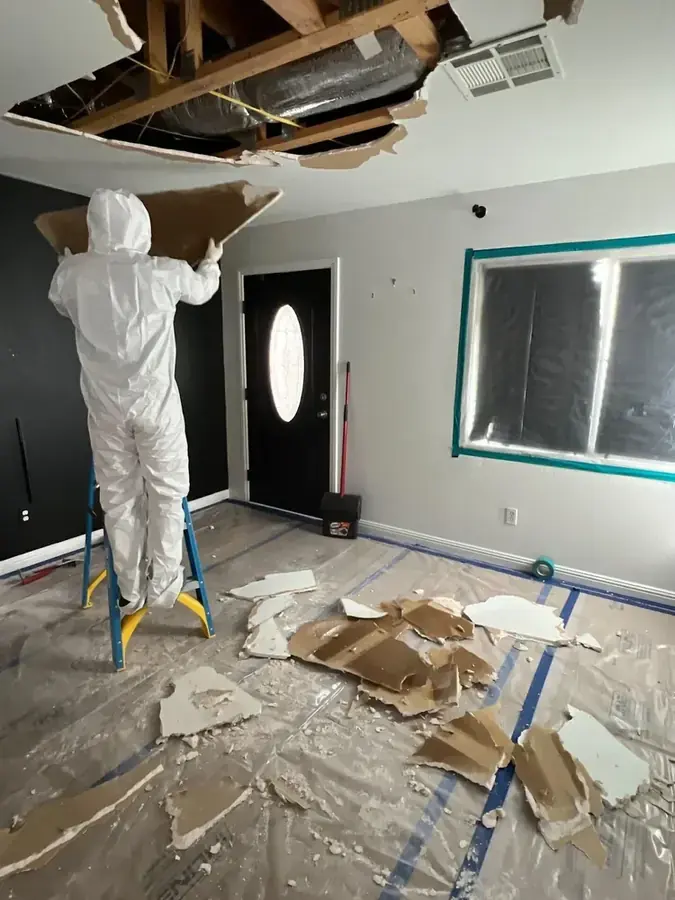
A ceiling stain is water telling on itself. When a brown ring spreads across the drywall or the paint starts to bubble and sag in a Vistancia two story or a Fletcher Heights home, water is running down from somewhere above and pooling on top of the ceiling board. The stain is almost never directly under the leak, which is why chasing the drip is the first thing we do.
How we handle ceiling leak water damage in Peoria
Call and dispatch
A real person answers 24/7 and the nearest Peoria crew rolls with pumps, air movers, and moisture meters.
On-site assessment
We find the source and the full reach of the water, including what soaked into slab, subfloor, and wall cavities.
Extract and dry
We pull the standing water, then run air movers and dehumidifiers to a verified dry standard, not just the surface.
Verify and bill
We log moisture readings until the structure is dry, then document the loss and bill your carrier directly.
Water from above has three usual sources
A ceiling leak is a symptom, not a diagnosis. In Peoria the water above the drywall comes from one of three places, and each is a different fix.
- The roof envelope, where wind driven monsoon rain gets under tile, flashing, or a low slope seam and runs along the framing
- The air handler in the attic, where a failed drain pan or clogged line overflows onto the ceiling below
- An upstairs supply or drain line, a toilet, tub, or shower on the second floor that leaks into the joist bay
We separate a roof and storm leak from an AC condensate overflow before we open anything, because a wrong guess means a dry hole in the ceiling and a leak that keeps running.
How we trace and dry a ceiling leak
The goal is to find the source, dry the ceiling cavity, and keep the repair small. Water pools on the top side of the drywall, so what looks like a small stain often sits on a saturated sheet.
- Thermal imaging and moisture meters map how far the wet area really reaches
- We follow the water uphill to the actual entry point in the roof, air handler, or upstairs line
- Small relief openings let trapped water drain instead of collapsing the ceiling
- Air movers and dehumidifiers dry the drywall, insulation, and framing in the cavity
Wet blown in insulation loses its R value and stays damp for weeks, so we pull and replace saturated insulation rather than drying around it. Our drying targets follow the IICRC restoration standard so the cavity is dry before it gets closed up.
Stain spreading or the ceiling starting to sag? Call before it drops. A Peoria crew traces the source and starts drying, 30 to 60 minutes out.
☎ Call (623) 304-4827The hidden risk overhead is electrical
Ceilings are full of wiring, junction boxes, and can lights, so a ceiling leak is one of the few water losses that is genuinely dangerous, not just costly.
- Water tracks along wiring and pools inside recessed light housings
- A stain around a light or fan means power to that circuit should be off
- A bulging, heavy ceiling can let go all at once, so we relieve it in a controlled way
If you see a wet ceiling light, leave the switch alone and keep people out from under the bulge. The CDC guidance on water and electrical hazards is worth a read for any homeowner. No Sloth Water Damage checks the circuits before we work under a wet ceiling.
Put a bucket, not a bigger hole
If a ceiling is bulging with trapped water, resist stabbing it wide open. Set a bucket, keep the area clear, and let our crew make a controlled relief cut so the water drains without bringing the whole sheet down.
A ring showed up on our upstairs hallway ceiling after a July storm and kept getting bigger. I assumed roof, but they traced it to the attic air handler pan, dried the whole cavity, and shut the power to a light that was soaked. Two guesses would have cost us a second ceiling.
Whitney J. · Vistancia, Peoria · July 2026
Why Peoria calls us first
On-site in 30 to 60 minutes
A person answers 24/7 and the nearest crew rolls the moment you call, day or night, across Peoria and the northwest Valley.
IICRC-certified crews
Trained technicians with pumps, air movers, and moisture meters who dry to a verified standard, not a mop and a fan.
We bill your insurer
We document the loss with photos and readings and work with your carrier directly, so the paperwork is not on you.
Deep local knowledge
Monsoon roof leaks, slab leaks, AC overflows, and hard water. We know how water moves in a northwest-Valley home.
From central Peoria across the whole northwest Valley
Seated on W Peoria Ave, we respond across every Peoria ZIP, day or night.
Seated on W Peoria Ave in central Peoria, our crews cover the whole city, day or night, and reach most homes in 30 to 60 minutes.
We serve Peoria, Glendale, Sun City, Sun City West, Surprise, Youngtown, El Mirage, and the northwest Valley.
See every neighborhood and ZIP we serve ›Related restoration services
Peoria water damage questions, answered
Water in your home right now?
Do not wait for the FAQ. A local Peoria crew is standing by 24/7.
(623) 304-4827 Call nowWhat does a spreading ceiling stain actually mean?
It means water is running down from above the drywall and pooling on top of the ceiling board. The stain shows up wherever the water settles, not under the leak itself, so the source is usually somewhere off to the side and higher up.
How do you tell a roof leak from an AC leak?
We look at timing and pattern. Water that shows up only during or after a monsoon storm points to the roof, while a stain that grows on a hot day with the AC running points to the condensate line or drain pan. Thermal imaging and tracing the water confirm which it is.
Is a leaking ceiling dangerous?
It can be, because ceilings hold wiring, junction boxes, and recessed lights. Water pooling in a light housing or along a circuit is a real shock and fire risk, so we keep power off to that area and check it before anyone works underneath.
Should I poke a hole to drain a bulging ceiling?
No. A heavy, bulging ceiling can collapse if you open it wrong. Set a bucket, keep people clear, and let our crew make a small controlled relief cut so the trapped water drains safely without dropping the whole sheet of drywall.
Do you replace the wet insulation above the ceiling?
Usually yes. Wet blown in insulation mats down, loses its R value, and stays damp long after the drywall dries. We pull the saturated insulation, dry the framing and cavity, and replace it so the ceiling is not sealed up over a damp space.
A local Peoria crew is standing by
Water sitting means damage spreading. Call No Sloth Water Damage and a local crew is on the way, 30 to 60 minutes out across the northwest Valley.
(623) 304-4827Call now, a local crew picks up day or night