Structural Drying & Dehumidification in Peoria, AZ
Desert air alone will not reach the water trapped in your walls and slab. Peoria water damage pros run air movers and dehumidifiers to a verified dry standard, 24/7.
(623) 304-4827Reach the Peoria dispatch line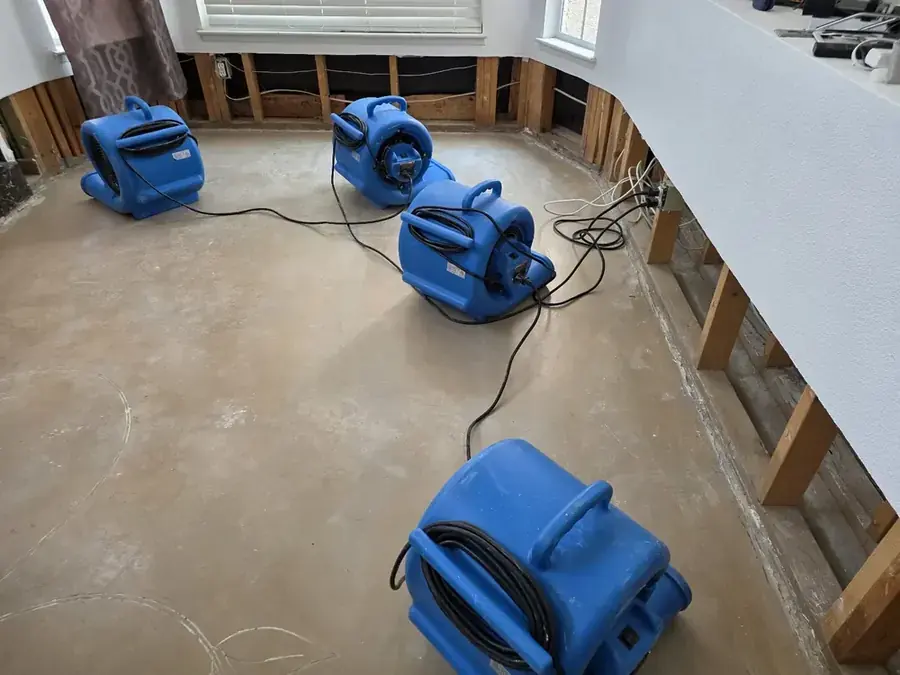
Extraction gets the standing water out, but the loss is not over until the structure is dry. In Peoria homeowners assume our dry air handles the rest, and it does not. Water hides in wall cavities, under tile, in the slab, and inside the bottom plate of the framing, where outside air never reaches it. Structural drying is the monitored pillar that takes those hidden materials back to a verified standard so the repair holds.
How a structural drying & dehumidification loss is handled in Peoria
Call and dispatch
Peoria water damage pros answer around the clock and the nearest crew rolls with pumps, air movers, and moisture meters.
On-site assessment
The tech who does the walkthrough maps the source and the full reach of the water, including what soaked into slab, subfloor, and wall cavities.
Extract and dry
The extraction crew pulls the standing water, then air movers and LGR dehumidifiers dry the structure to the IICRC S500 goal, not just the surface.
Verify and document
The drying team records moisture readings daily until the structure is dry, then documents the loss with photos and logs for the claim file.
Why desert air does not finish the job
Phoenix air is dry, but it does not circulate through a sealed wall cavity or pull moisture out of a concrete slab. Trapped water just sits and keeps everything around it damp.
- Drywall and baseboards feel dry on the surface while the cavity stays soaked
- Slab and mortar hold moisture for days after the floor looks fine
- Insulation and the bottom wall plate wick water sideways out of sight
- A warm, damp cavity is exactly what mold needs to start in our climate
This is why a proper dry-out uses forced airflow plus dehumidification instead of open windows. The EPA points out that wet materials must be dried quickly to keep a water loss from turning into a mold problem.
How a structure is dried to standard
Crews build a drying system sized to the loss, then measure it every day until the materials read dry, not until they look dry.
- The crew meters every wet material and sets a target dry standard from unaffected areas
- Air movers push high-velocity air across walls, floors, and cavities
- LGR dehumidifiers pull that released moisture out of the air
- The drying team takes daily moisture and humidity readings and logs the drop
- Crews follow the IICRC S500 drying standard the whole industry uses
When the water came through the roof or an upstairs line, the crew coordinates with the ceiling leak team, and when it sits in the concrete the mat systems the slab leak team uses dry it from inside the slab.
Already had water pulled out but the walls still feel damp? Call the Peoria dispatch line and a crew sets up a monitored dry-out, day or night.
☎ Call (623) 304-4827Why a verified dry-out matters
Skipping the drying stage or calling it done early is where a small water loss becomes an expensive one across Peoria and the northwest Valley.
- Repairs installed over damp framing trap the moisture behind new material
- Hidden wet cavities grow mold in a matter of days in our heat
- Warped floors, cupped wood, and swollen trim show up weeks later
- An insurance file with daily readings supports the claim you filed
A documented dry standard is the difference between fixing the loss once and reopening the wall next season. The crew does not release the job until the numbers say the structure is dry.
Do not put the drywall back too soon
The most common mistake in Peoria is closing a wall or laying new floor while the cavity is still wet. Ask for the final moisture readings before any repair goes in, so nothing gets sealed over damp framing.
How a Peoria water loss gets handled
Rapid local response, day or night
Peoria water damage pros answer around the clock and dispatch the nearest crew, because standing water moves into slab, baseboard, and drywall within hours.
IICRC S500 drying standard
IICRC S500 is the industry standard for structural drying, so the equipment stays until daily readings say dry, not until the surface looks dry.
Claim-ready documentation
Moisture maps, daily psychrometric logs, and timestamped photos before any demolition give the adjuster the file a water claim is decided on.
Local water experts
Monsoon roof leaks, slab leaks, AC overflows, and hard water: local water damage experts know how water moves in a northwest-Valley home.
From central Peoria across the whole northwest Valley
The response team covers every Peoria ZIP and the northwest Valley, day or night.
From central Peoria, the response team covers the whole city and the northwest Valley, day or night, with rapid local response.
Coverage includes Peoria, Glendale, Sun City, Sun City West, Surprise, Youngtown, El Mirage, and the northwest Valley.
See every neighborhood and ZIP covered ›Related restoration services
Peoria water damage questions, answered
Water in your home right now?
Do not wait for the FAQ. Peoria water damage pros answer day or night.
(623) 304-4827 Get a Peoria pro on the lineWhy not just open the windows and let the dry Phoenix air do it?
Because outside air does not move through a sealed wall cavity or pull water out of a slab. The surface dries while the framing and mortar stay wet. A drying system forces air across those materials and a dehumidifier removes the moisture, which open windows in the desert climate cannot do.
How long does structural drying take?
Most Peoria jobs run three to five days, but the materials decide, not the calendar. Drywall dries faster than a slab or hardwood. The crew meters everything daily and keeps the equipment running until the readings hit the dry standard, then takes it out.
How do you know when the structure is actually dry?
The crew sets a target from unaffected areas of your home, then takes moisture readings on every wet material every day. When the wet materials read the same as the dry baseline, the structure is dry to standard, and the drying team logs those numbers for your file.
Do I really need dehumidifiers, or are fans enough?
You need both. Air movers pull water out of the materials and into the air, and the dehumidifiers remove that moisture so it does not just resettle into other walls. Fans alone can spread the humidity around and make things worse.
Will insurance pay for the drying equipment?
Structural drying is a standard covered part of a water loss. The restoration contractor documents the loss with photos and daily moisture logs and lists the equipment and the dry-down. Coverage depends on your policy, so it is worth checking with your carrier.
Peoria water damage pros are ready day and night
Water sitting means damage spreading. Call No Sloth Water Damage and the response team gets a Peoria crew moving across the northwest Valley, day or night.
(623) 304-4827Call now, a Peoria pro picks up day or night