Roof & Storm Leak Water Damage in Peoria, AZ
When a monsoon microburst drives rain under your tile or low-slope roof, it soaks the attic and ceilings from above. Our crews tarp it and dry it out, 24/7 across Peoria.
(623) 304-4827Tap our 24/7 Peoria dispatch line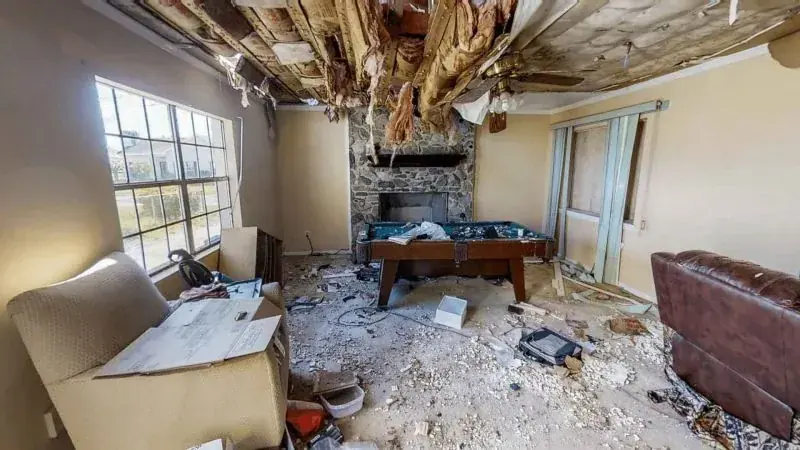
A roof leak is a different loss than water that floods in at ground level. Here the water comes from above. When a monsoon microburst slams Peoria, the wind drives rain sideways under tile, past worn flashing, and over the edge of a low-slope roof, then it runs down the decking and soaks the attic, insulation, and ceilings before a single drop shows on the drywall. By the time you see the brown ring, the water has usually been tracking through the structure for hours.
How we handle roof & storm leak water damage in Peoria
Call and dispatch
A real person answers 24/7 and the nearest Peoria crew rolls with pumps, air movers, and moisture meters.
On-site assessment
We find the source and the full reach of the water, including what soaked into slab, subfloor, and wall cavities.
Extract and dry
We pull the standing water, then run air movers and dehumidifiers to a verified dry standard, not just the surface.
Verify and bill
We log moisture readings until the structure is dry, then document the loss and bill your carrier directly.
How monsoon storms breach a Peoria roof
The tile and low-slope foam roofs common across Peoria fail in specific spots when a storm hits hard:
- Cracked or slipped tiles that let wind-driven rain reach the underlayment
- Failed flashing at walls, skylights, and roof vents
- Ponding water on flat and low-slope foam roofs that finds a seam
- Parapet and scupper leaks on the flat roofs around Old Town Peoria
- Tile roofs on the north-end homes in Sonoran Mountain Ranch and Vistancia after a microburst
The National Weather Service in Phoenix tracks the microbursts and blowing dust that come with these storms, and the strongest cells are the ones that push water past a roof that shed rain fine all year.
Tarping the roof and drying the attic
Our first move is to stop more water from getting in, then dry the structure from the top down.
- Tarp or temporarily seal the point of entry so the next storm does not add to the loss
- Remove wet, matted attic insulation that holds water against the ceiling
- Dry the roof decking, trusses, and the top of the ceiling drywall
- Trace where the water tracked, since it rarely drips straight down
- Verify a dry reading with meters before closing up
Where the water has come through the ceiling, we handle it together with our ceiling leak work so the drywall and the cavity above it both get dried.
Ceiling staining after a storm? One call, day or night, and a Peoria crew tarps the roof and starts drying in 30 to 60 minutes.
☎ Call (623) 304-4827Documenting the storm loss
Wind-driven rain through a damaged roof is one of the more commonly covered water losses on an Arizona policy, but it has to be documented well. No Sloth Water Damage logs the loss for you.
- We photograph the roof entry point, the attic, and the ceiling damage
- We record moisture readings the way an adjuster needs them
- Our structural drying crews finish the dry-out to standard and we coordinate the roofer for the permanent repair
The drying follows the guidance from the IICRC, so the attic and ceiling are dry to a reading, not just dry to the eye.
Photograph everything before cleanup starts
Before you or anyone touches the mess, take clear photos of the ceiling stain, any dripping, and the roof if you can safely see it from the ground. Those images make the storm claim far smoother.
A big monsoon cell came through and the next morning the ceiling in the back bedroom was bulging and dripping. They tarped the roof that day, pulled the soaked insulation, and dried the attic and ceiling. They took photos of all of it, which made the insurance side simple.
Kyle W. · Sonoran Mountain Ranch · September 2026
Why Peoria calls us first
On-site in 30 to 60 minutes
A person answers 24/7 and the nearest crew rolls the moment you call, day or night, across Peoria and the northwest Valley.
IICRC-certified crews
Trained technicians with pumps, air movers, and moisture meters who dry to a verified standard, not a mop and a fan.
We bill your insurer
We document the loss with photos and readings and work with your carrier directly, so the paperwork is not on you.
Deep local knowledge
Monsoon roof leaks, slab leaks, AC overflows, and hard water. We know how water moves in a northwest-Valley home.
From central Peoria across the whole northwest Valley
Seated on W Peoria Ave, we respond across every Peoria ZIP, day or night.
Seated on W Peoria Ave in central Peoria, our crews cover the whole city, day or night, and reach most homes in 30 to 60 minutes.
We serve Peoria, Glendale, Sun City, Sun City West, Surprise, Youngtown, El Mirage, and the northwest Valley.
See every neighborhood and ZIP we serve ›Related restoration services
Peoria water damage questions, answered
Water in your home right now?
Do not wait for the FAQ. A local Peoria crew is standing by 24/7.
(623) 304-4827 Call nowIs a roof leak different from monsoon flooding?
Yes. A roof leak enters from above, with wind-driven rain getting past tile, flashing, or a low-slope roof and soaking the attic and ceiling. Monsoon flooding is ground water that rises and pushes in at floor level. We handle both, but they are dried differently.
Can you stop the leak before the next storm?
We tarp or temporarily seal the entry point on the first visit so the next monsoon does not add to the damage, then we coordinate a roofer for the permanent repair once the structure is dry.
Why is my ceiling stain far from where the roof leaks?
Water rarely drips straight down. It runs along the decking, trusses, and top of the drywall until it finds a low point, so the stain can appear well away from the actual roof entry. We trace the path with meters to find the true source.
Does insurance cover a monsoon roof leak?
Wind-driven rain that enters through storm-damaged roofing is often covered on an Arizona homeowners policy. We photograph the entry point and record the moisture readings so the loss is documented the way an adjuster needs.
Do you dry the attic insulation or replace it?
Lightly damp insulation can sometimes be dried, but matted, saturated insulation holds water against the ceiling and is usually removed. We check it with meters and take out only what stays wet.
How fast should I call after I see a roof leak?
Right away. The longer water sits in the attic and ceiling, the more it spreads and the higher the risk of sagging drywall and mold. Fast tarping and drying keep a storm leak from becoming a much larger repair.
A local Peoria crew is standing by
Water sitting means damage spreading. Call No Sloth Water Damage and a local crew is on the way, 30 to 60 minutes out across the northwest Valley.
(623) 304-4827Call now, a local crew picks up day or night